

COMPLIANCE STUDIES
A platform for education, research and professional dialogue
Compliance Studies is a platform established at the University of Belgrade Faculty of Law to advance education, research and sustained professional dialogue on compliance. It has developed from the Executive Education Certificate Programme in Compliance, launched in 2023 at the initiative of Professor Tatjana Jovanić, who serves as its Academic Director. At the centre of the platform is the Executive Education Certificate Programme in Compliance, delivered within the Faculty’s lifelong-learning framework. Around the Programme, Compliance Studies brings together academics, legal and compliance professionals, managers, representatives of regulatory and public institutions, students and alumni through professional education, research, publications, Executive Dialogues and international cooperation.
The platform is founded on a broader understanding of compliance than regulatory conformity alone. Compliance is often reduced, in both legal and managerial practice, to demonstrating adherence to applicable rules or operating a specialised internal control function. Compliance Studies takes a more integrative approach. It examines how law, governance, risk management, integrity, ethics, organisational culture and professional judgement interact. Its central concern is not only whether an organisation formally complies with rules, but how it creates the structures, responsibilities and decision-making practices through which lawful, ethical and responsible conduct becomes possible. The approach of Compliance Studies preserves the distinct legal frameworks, protected interests and forms of responsibility found in different regulatory regimes, while developing the horizontal organisational capabilities needed to translate legal and ethical expectations into practice.
The Executive Education Certificate Programme
The Executive Education Certificate Programme in Compliance is the principal educational pillar of the Compliance Studies platform. Launched by the University of Belgrade Faculty of Law in 2023, it was the first programme of its kind offered by a higher education institution in Serbia and is among the earliest university-led executive compliance programmes in Southeast Europe.
Teaching is led by members of the University of Belgrade Faculty of Law. Academics from the University of Belgrade’s Faculty of Economics, Faculty of Organizational Sciences and Faculty of Security Studies, as well as the Faculty of Law at the University of Niš, also take part. The Programme draws on representatives of state authorities, regulatory and other independent bodies and public institutions, alongside experienced practitioners.
From the Programme’s inception, the Serbian Corporate Compliance Association has provided professional support and contributed practitioners’ perspectives to the development of its syllabus, helping to shape the subject matter in response to the needs of professional practice. The Programme forms part of the Faculty’s commitment to lifelong learning and to connecting academic knowledge with the changing responsibilities of legal, compliance, governance, risk and management professionals.
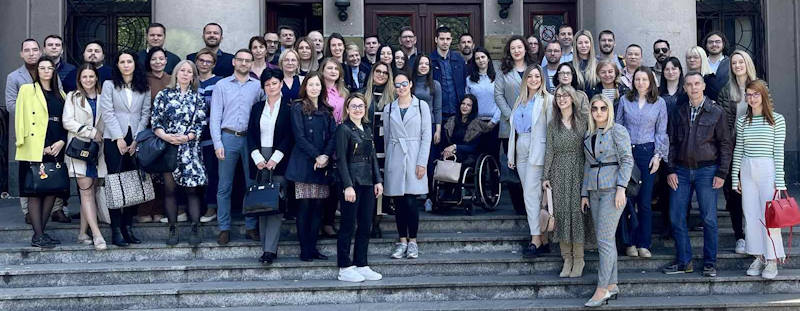
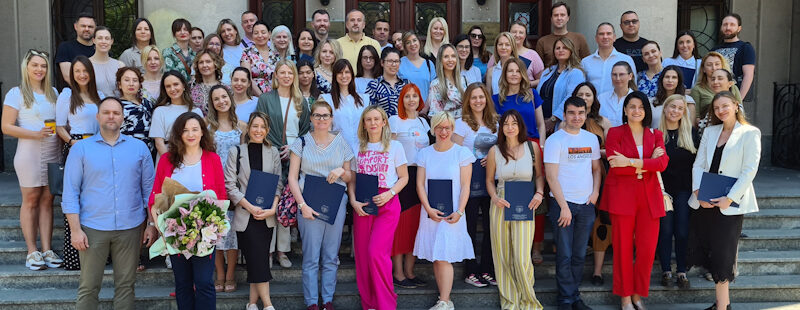
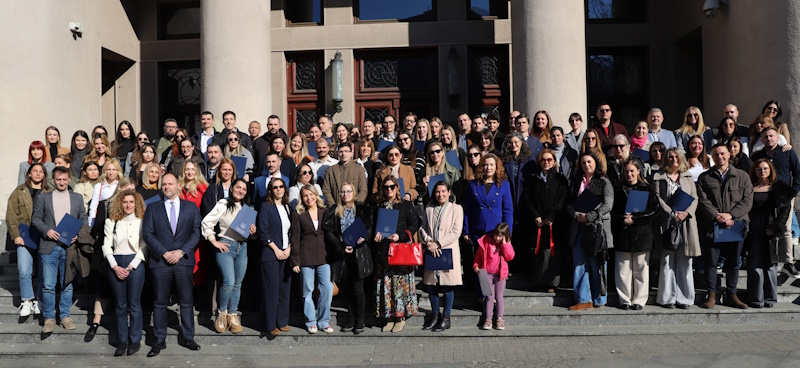
Three generations have successfully completed the Programme. The Compliance Studies alumni network now comprises 240 alumni, predominantly from Serbia, together with professionals who attended the Programme from Bosnia and Herzegovina, Montenegro and Croatia.
Beyond the classroom
Compliance Studies extends beyond the Certificate Programme. It provides a framework for Executive Dialogues, research, alumni engagement and cooperation with universities, professional associations, regulators and organisations in Serbia and internationally. Its purpose is to create a lasting space for substantive academic and professional exchange on how compliance is understood, taught and practiced – and how it must develop in response to changing regulation, organisations and technology.
From legal foundations towards an integrative approach to compliance
The Certificate Programme was initially built around a predominantly legal curriculum. Its starting point was the need to understand the expanding regulatory framework, the responsibilities of companies and institutions, and the emerging professional role of compliance. Experience gained through three generations has gradually reshaped that original model. Contemporary compliance cannot be taught simply as a collection of legal rules or sector-specific regulatory requirements. Legal obligations operate through organisations: risks must be identified, responsibilities allocated, procedures designed, controls tested, concerns escalated and decisions documented.
Compliance Studies adopts an integrative approach that does not reduce compliance to regulatory conformity or to a single corporate control function. It brings together several complementary perspectives. Compliance Management Systems provide a structured cycle for identifying risks and designing, implementing, monitoring and continuously improving organisational responses. Governance, Risk and Compliance (GRC) situates compliance within the wider architecture of governance, risk management and internal control, while integrity and ethics provide the normative orientation that prevents compliance from becoming a merely formal or procedural exercise. Law & Management adds an educational perspective by examining how legal requirements are translated into decision rights, organisational processes, controls and accountable professional judgement, without obscuring the differences between legal regimes. Taken together, these perspectives allow compliance to be studied as a legal, managerial, organisational and ethical field of inquiry and practice.
The rapid development of artificial intelligence has made this transition even more important. As AI increasingly supports research, classification, drafting and routine regulatory analysis, professional value can no longer rest only on access to legal knowledge. Lawyers, compliance professionals and managers must also be able to exercise independent judgement, understand organisational systems, question automated recommendations and design conditions in which responsible human decision-making remains possible.
A shared compliance core with three specialised pathways
Compliance Studies is not a series of separate courses on regulatory compliance in individual industries. It aims to provide a common horizontal framework for understanding how compliance operates across organisations and regulatory fields. Regime-specific legal knowledge remains essential where the applicable obligations, protected interests and forms of responsibility differ. The Programme therefore combines a shared organisational and methodological core with opportunities for more focused legal and professional specialisation. Beginning with its fourth generation, Compliance Studies introduces a modular curriculum consisting of a common core and three specialised pathways.
Common core – The common core develops the knowledge and capabilities required across different compliance environments. It introduces participants to the legal and institutional foundations of compliance, governance and the internal control system, risk-based approaches, organisational responsibilities, compliance policies and procedures, the methods and tools of compliance function, business ethics and organisational culture. The Common Core combines selected cross-cutting regulatory fields with the organisational capabilities required for their effective implementation. It addresses selected regulatory fields of broad practical relevance,such as personal data protection, competition law, anti-corruption, information security, the regulation and governance of artificial intelligence. These fields are not taught solely through the interpretation of legal rules. Participants also examine how legal requirements operate within organisations.
Specialised pathways – Participants select one of three specialised modules:
ESG Risk Management & Compliance – This module examines the relationship between sustainability requirements, corporate governance, human rights, environmental responsibility and the organisational implementation of ESG-related obligations.
Compliance in the Public Sector – This module explores how compliance, integrity, internal financial control, risk management, public procurement and accountability can be connected within public-sector organisations. Public compliance is approached as an integrative framework rather than as an additional administrative system.
Corporate Misconduct & Internal Investigations – This module addresses the prevention, detection and investigation of corporate misconduct, including the organisation of internal investigations, procedural safeguards, employment-law implications, evidence, reporting and remediation. The modular design enables participants to build a shared compliance language while developing deeper competence in the area most relevant to their professional responsibilities.
Teaching and learning
The Programme comprises approximately 90 hours of teaching, workshops and other interactive learning activities.
Participants include lawyers and non-lawyers working in compliance, legal affairs, governance, risk management, internal control, internal audit, human resources, sustainability, data protection and related functions. This professional diversity is an essential part of the learning process: participants learn not only from individual lecturers but also through structured exchange across professional and institutional boundaries.
Fourth generation: 2026–2027
Teaching for the fourth generation is scheduled to begin on 10 October 2026 and continue until mid-March 2027. Further information about admission, tuition fees and the application procedure is available on the Enrolment page. https://ius.bg.ac.rs/compliance-upis/
The Programme is delivered predominantly in person at the University of Belgrade Faculty of Law. Selected parts of the specialised modules will be delivered online. The Programme is deliberately not designed as a fully online programme. Direct interaction, discussion, case-based work and sustained exchange among participants and lecturers are central to the quality of the Programme. Digital delivery is therefore used selectively, where it enhances rather than replaces the educational experience.
A programme that continues to evolve
Compliance Studies is not presented as a completed or fixed educational model. The Programme’s development across four generations reflects changes in regulation, professional practice, organisational responsibility and technology. The continuing purpose of the Programme is to create a rigorous university setting in which legal and non-legal professionals can develop a shared understanding of compliance without losing the distinctive knowledge and responsibility of their respective disciplines. The Programme’s evolving direction is summed up by its Academic Director, Professor Tatjana Jovanić: “From understanding legal requirements to designing the organisational conditions in which responsible compliance and professional judgement become possible.”
At a glance
- Executive Education Certificate Programme launched in 2023
- First university-based executive compliance programme of its kind in Serbia and one of the first in Southeast Europe
- Fourth generation beginning in October 2026
- Approximately 90 hours of teaching and interactive learning
- Common core and three specialised modules
- Predominantly in-person delivery, with selected online sessions
- 240 alumni from Serbia and the wider region
- Designed for legal and non-legal professionals
- Delivered within the lifelong-learning framework of the University of Belgrade Faculty of Law
Contact
For further information about Compliance Studies, please contact: compliance@ius.bg.ac.rs